Abdominal Acupuncture (Bo's Method): How Dr. Bo Zhiyun's System Works, Its Texts, Technique, and What Research Shows
Abdominal acupuncture, also called Bo's Method of Abdominal Acupuncture (BMAA), treats the whole body through points around the navel. It was developed by Dr. Bo Zhiyun in China beginning in 1972 and uses thin needles inserted to set depths with little manipulation. This guide covers its history, how it works, its texts and the research, which is mostly from China.
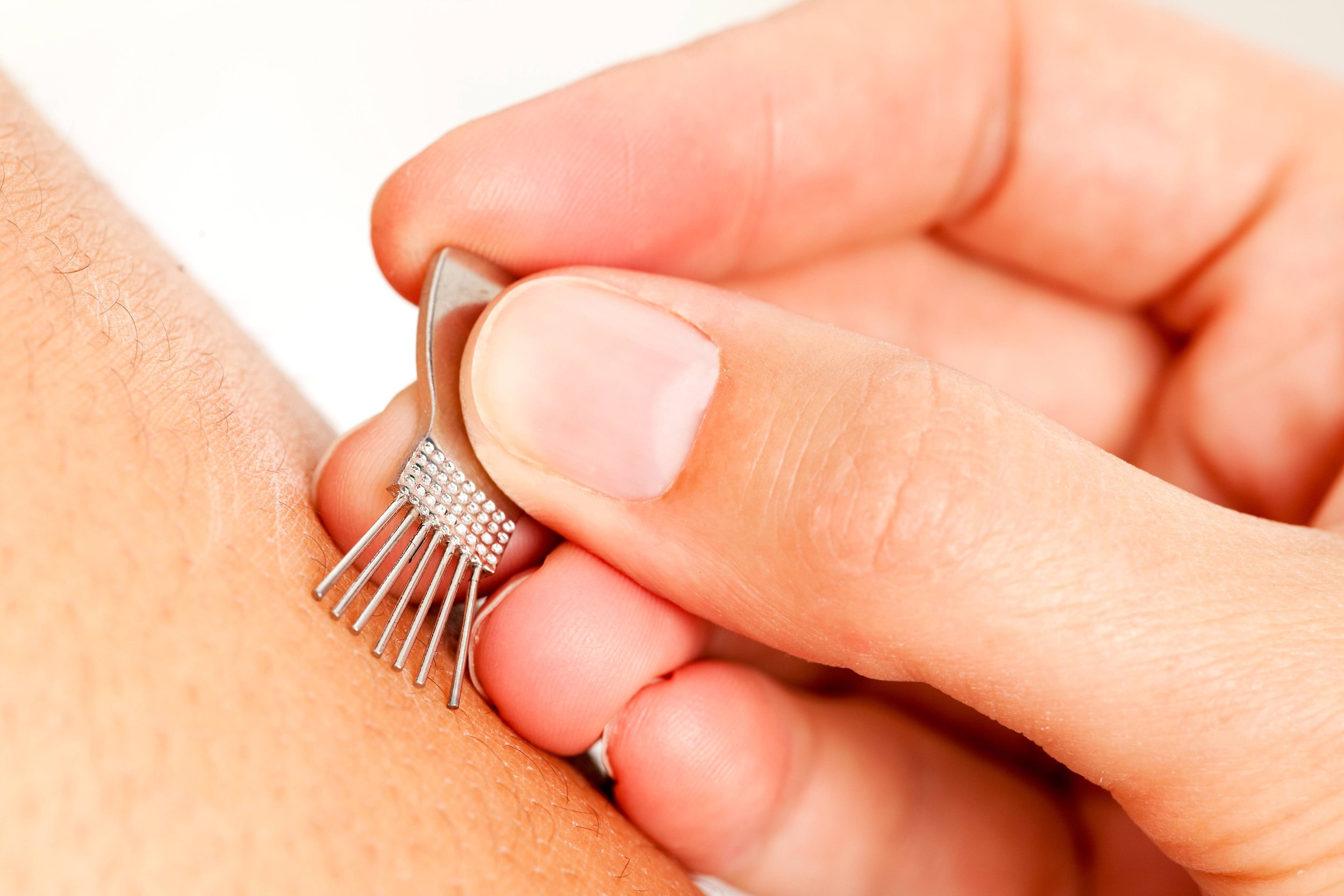
- Dr. Bo Zhiyun began developing abdominal acupuncture in 1972 after treating a case of low back pain and sciatica with points below the navel, then studied abdominal points for about 30 years (Ryan, 2009).
- The system maps the body onto the abdomen around the navel, often pictured as a tortoise, and uses three needling depths for different purposes (Ryan, 2009).
- A meta-analysis of 21 trials with 1,473 people found abdominal acupuncture added to standard care improved motor function and daily activities after stroke (Zhan et al., 2021).
- A review of 97 Chinese trials comparing it with body acupuncture found most reported it worked better, but reporting quality was poor (Wen et al., 2016).
- It is not used during pregnancy or in acute abdominal conditions.
New to Acupuncture?
See what a first visit involves, how long sessions run (45 to 60 minutes), and what treatment costs.
New PatientsWhere Abdominal Acupuncture Came From
In 1972, Dr. Bo Zhiyun treated a patient with low back pain and sciatica who had not improved with other care. Reasoning from the classical pairing of the front and back midline channels, he needled CV4 and CV6 below the navel, and the patient's pain eased. He saw similar responses in other patients and spent about three decades mapping points on the abdomen, then standardized the method and its training (Ryan, 2009).
How the System Is Organized
Bo described the abdomen as containing more than one map of the body. These are the tradition's own models for choosing points:
- A body map around the navel: the head, arms and legs are mapped onto the abdomen around the umbilicus, often drawn as a tortoise lying on its back. Shoulder, elbow, knee and other points are placed accordingly (Ryan, 2009).
- An organ map: deeper points are linked to the internal organs, arranged according to the eight trigrams of the Book of Changes (Ryan, 2009).
- Three depths: shallow, middle and deep needling are used for different purposes, from musculoskeletal problems near the surface to internal conditions at the deepest level (Ryan, 2009).
How Treatment Is Done
- Standard formulas: the method uses more than 20 set point formulas for common conditions, adjusted for each patient (Ryan, 2009).
- Needles: very thin needles are inserted to set depths and manipulated only lightly, so the treatment is usually comfortable (Ryan, 2009).
- Exam: practitioners combine traditional assessment with a Western physical exam (Ryan, 2009).
- Common uses: neck and low back pain, sciatica, shoulder and knee pain, and recovery after stroke.
How It Might Work
In scientific terms, needling the abdominal wall stimulates sensory nerves from the lower thoracic and upper lumbar spinal segments. Signals from these nerves reach the spinal cord and brain, where they may influence pain processing elsewhere in the body. Why specific abdominal points would affect specific distant areas, as the body map proposes, has not been explained by research.
| Abdominal (Bo) | Ear (auricular) | Scalp | |
|---|---|---|---|
| Developer | Bo Zhiyun, China, from 1972 | Paul Nogier, France, 1957 | Jiao Shunfa, China, 1971 |
| Map | Body mapped around the navel | Inverted fetus on the ear | Brain areas under the scalp |
| Most studied for | Stroke recovery, spine pain | Pain around surgery, addiction | Stroke recovery |
What Research Shows
- Stroke: a 2021 meta-analysis of 21 randomized trials (1,473 patients) found abdominal acupuncture added to other treatment improved overall, upper limb and lower limb motor scores and daily activity scores compared with the other treatment alone. Side effects were rare, mostly minor bruising, but the trials had methodological weaknesses (Zhan et al., 2021).
- Compared with body acupuncture: a review of 97 randomized trials found 80.4% reported abdominal acupuncture worked better than conventional body acupuncture, particularly for lumbar disc herniation, cervical spondylosis and shoulder problems, but most trials were poorly reported (Wen et al., 2016).
- Neck pain with nerve symptoms: a 2023 meta-analysis examined abdominal acupuncture for cervical spondylotic radiculopathy (Peng et al., 2023).
- Constipation after stroke: a 2026 meta-analysis found abdominal acupuncture added to conventional treatment improved response rates and shortened the time to a first bowel movement, though the cumulative evidence was not yet conclusive (Rukye et al., 2026).
Almost all trials were conducted in China and few used sham controls, so the effects specific to abdominal acupuncture remain uncertain.
| Source | Type | Main point |
|---|---|---|
| Ryan, 2009 | Overview article | History, maps, depths and technique |
| Zhan et al., 2021 | Meta-analysis, 21 RCTs | Better motor recovery after stroke as an add-on |
| Wen et al., 2016 | Review, 97 RCTs | Often reported better than body acupuncture; poor reporting |
Frequently Asked Questions
Why are the needles in my stomach if my back hurts?
Abdominal acupuncture maps the whole body onto the abdomen around the navel, so back, neck and limb problems are treated with abdominal points (Ryan, 2009).
Is abdominal acupuncture painful?
It uses very thin needles with little manipulation, and most people find it comfortable (Ryan, 2009).
How deep do the needles go?
Depth depends on the purpose: shallow for surface and musculoskeletal problems, deeper for internal conditions (Ryan, 2009). Needles stay in the abdominal wall.
Is there good evidence for it?
There are many trials, mostly from China, with promising results for stroke recovery and spine problems, but their quality is limited (Zhan et al., 2021; Wen et al., 2016).
Looking for Acupuncture or Dry Needling?
Morningside Acupuncture on the Upper West Side offers acupuncture and dry needling from New York licensed acupuncturists. See what a first visit involves and what treatment costs.
New PatientsReferences
- Peng, Y., Wu, J., Wu, Y., & Chen, F. (2023). Abdominal acupuncture therapy for cervical spondylotic radiculopathy: A systematic review and metaanalysis. Asian Journal of Surgery, 46(12), 5776-5778. https://doi.org/10.1016/j.asjsur.2023.08.138
- Rukye, W., Yang, H., Li, Y., Li, X., Xu, N., & Wu, Z. (2026). Efficacy of Abdominal Acupuncture in Poststroke Constipation: A Systematic Review and Meta-Analysis With Trial Sequential Analysis. Brain and Behavior, 16(5), e71442. https://doi.org/10.1002/brb3.71442
- Ryan, P. (2009, September). A comprehensive introduction to abdominal acupuncture. Acupuncture Today. https://www.acupuncturetoday.com/mpacms/at/article.php?id=32045
- Wen, W., Yang, L., Liu, S., Zhong, Y., Hu, X., Huang, X., & Guo, X. (2016). [Reporting quality and effect size comparison in randomized controlled trials of bo's abdominal acupuncture using CONSORT statement and STRICTA]. Journal of Traditional Chinese Medicine = Chung I Tsa Chih Ying Wen Pan, 36(3), 382-391. https://doi.org/10.1016/s0254-6272(16)30053-x
- Zhan, J., Xiong, B., Zhang, P., Wang, Y., Tang, Y., Zhan, L., & Lu, L. (2021). Abdominal Acupuncture as an Adjunctive Therapy for the Recovery of Motor Function After Stroke: A Systematic Review and Meta-Analysis of Randomized Controlled Trials. Frontiers in Neurology, 12, 705771. https://doi.org/10.3389/fneur.2021.705771
Disclaimer: This web site is intended for educational and informational purposes only. Reading this website does not constitute providing medical advice or any professional services. This information should not be used for diagnosing or treating any health issue or disease. Those seeking medical advice should consult with a licensed physician. Seek the advice of a medical doctor or other qualified health professional for any medical condition. If you think you have a medical emergency, call 911 or go to the emergency room. No acupuncturist-patient relationship is created by reading this website or using the information. Morningside Acupuncture PLLC and its employees and contributors do not make any express or implied representations with respect to the information on this site or its use.